
The Master in
European Studies
includes 3 possible orientations:
THE ORIENTATION «CULTURES AND SOCIETIES»
is part of the legacy of the founder of the European Institute, Denis de Rougemont, for whom culture played an essential role in the construction of Europe. This orientation focuses on the diversity of Europe's cultural sources, its rich history and its long process of construction. The orientation includes courses in history, the history of ideas, as well as courses which explore the different dimensions of European culture: literature, cinema, intercultural relations, cosmopolitanism, etc.
THE ORIENTATION «ECONOMICS, POLITICS AND SOCIETIES»
includes courses in political science, sociology and economics. In addition to its focus on the European Union (EU) institutions, internal policies, relations with citizens, the media and security issues, this orientation places particular emphasis on the international aspects of the EU. In relation to economics, the orientation offers unique courses on the economic relations between Europe and the rest of the world, particularly developing countries.
THE ORIENTATION «INSTITUTIONS, LAW AND SOCIETIES»
focuses on the major role played by law in the process of European integration. The bases, construction, principles and application of European law provide the framework for this orientation. In the context of European integration, European law seems to predate European society. Within this orientation, the issue of how national societies, with their respective laws, and supranational European law can coexist is explored from an interdisciplinary perspective.
To complete their degree, students may opt for a work placement or a dissertation. The work placement aims to prepare students for professional activity and requires that students write a final report about the experience gained, while the dissertation prepares students for academic research.
The Master in
European Studies
includes 3 possible orientations:
THE ORIENTATION «CULTURES AND SOCIETIES»
is part of the legacy of the founder of the European Institute, Denis de Rougemont, for whom culture played an essential role in the construction of Europe. This orientation focuses on the diversity of Europe's cultural sources, its rich history and its long process of construction. The orientation includes courses in history, the history of ideas, as well as courses which explore the different dimensions of European culture: literature, cinema, intercultural relations, cosmopolitanism, etc.
THE ORIENTATION «ECONOMICS, POLITICS AND SOCIETIES»
includes courses in political science, sociology and economics. In addition to its focus on the European Union (EU) institutions, internal policies, relations with citizens, the media and security issues, this orientation places particular emphasis on the international aspects of the EU. In relation to economics, the orientation offers unique courses on the economic relations between Europe and the rest of the world, particularly developing countries.
THE ORIENTATION «INSTITUTIONS, LAW AND SOCIETIES»
focuses on the major role played by law in the process of European integration. The bases, construction, principles and application of European law provide the framework for this orientation. In the context of European integration, European law seems to predate European society. Within this orientation, the issue of how national societies, with their respective laws, and supranational European law can coexist is explored from an interdisciplinary perspective.
To complete their degree, students may opt for a work placement or a dissertation. The work placement aims to prepare students for professional activity and requires that students write a final report about the experience gained, while the dissertation prepares students for academic research.
Programme length
2 years (4 semesters)
Language of instruction
French
Passive knowledge of English recommended.
Conditions of registration
Admission Conditions
Bachelor or equivalent degree.
Admission based on application file.
unige.ch/gsi/fr/programmes/maee
Applications
Deadline: 28 February 2020
The Master in European Studies
- Core curriculum for the 3 concentrations (36 credits):
- European culture
- European history
- Political integration
- Methodological and interdisciplinary seminar
- European law
- Economic integration
- Orientation-specific courses and electives (54 credits)
- Work placement or dissertation (30 credits)
Videos

Student testimonials

Presentation

Mobility
Professional Prospects
Contact information
Contact information
Ms Maud Preher
T. +41 (0)22 379 37 11
[javascript protected email address]
The Master
Russia - East Central Europe
offers specialised education on Russia and the countries comprising East Central Europe. Historically, these are the countries formed after the dissolution of the USSR as well as those which had a shared destiny due to the establishment of communist regimes on their soil. After the collapse of the Soviet bloc and the fall of these regimes, these countries became sovereign states. However, most of them remain linked, whether geographically, culturally, linguistically, or as a result of their shared history of communism.
This Master's programme is interdisciplinary: while history and cultural studies are the dominant foci, other disciplines such as economics and political science are also mobilised in various ways within the curriculum. The interactions and connections between Russia and East Central Europe and other regional contexts are also explored.
To complete their degree, students may opt for a work placement or a dissertation. The work placement aims to prepare students for professional activity and requires that students write a final report about the experience gained, while the dissertation prepares students for academic research.
The Master
Russia - East Central Europe
offers specialised education on Russia and the countries comprising East Central Europe. Historically, these are the countries formed after the dissolution of the USSR as well as those which had a shared destiny due to the establishment of communist regimes on their soil. After the collapse of the Soviet bloc and the fall of these regimes, these countries became sovereign states. However, most of them remain linked, whether geographically, culturally, linguistically, or as a result of their shared history of communism.
This Master's programme is interdisciplinary: while history and cultural studies are the dominant foci, other disciplines such as economics and political science are also mobilised in various ways within the curriculum. The interactions and connections between Russia and East Central Europe and other regional contexts are also explored.
To complete their degree, students may opt for a work placement or a dissertation. The work placement aims to prepare students for professional activity and requires that students write a final report about the experience gained, while the dissertation prepares students for academic research.
Programme length
2 years (4 semesters)
Language of instruction
French
Passive knowledge of English recommended.
Conditions of registration
Admission Conditions
Bachelor or equivalent degree.
Admission based on application file.
unige.ch/gsi/fr/programmes/marem
Applications
Deadline: 28 February 2020
The Master Russia - East Central Europe
- Required courses from the core curriculum (30 credits):
- History of the USSR in international relations
- History of Central and Eastern Europe (1929-1989)
- History of Ukraine (19th to 21st centuries)
- The economics of Central and Eastern Europe
- Critical approach to the division of the world
- Specialised courses (48 credits):
- Concentration in one or more areas of the core curriculum.
- Electives (12 credits)
- Internship, thesis, "Geneva Global" programme (30 credits)
Videos
Presentation

Student testimonials
Mobility
Master's students are permitted to go on exchange for one semester maximum, as early as their third semester of study, and may earn no more than 30 credits at another university. The dissertation cannot be substituted.
Professional Prospects
Contact information
Contact Information
Ms Maud Preher
T. +41 (0)22 379 37 11
[javascript protected email address]
The Master in
Middle Eastern Studies
offer formation to students wishing to specialize in Middle Eastern issues by adopting an open and multidisciplinary approach.
With its ethnic, religious, economic and political diversity, the Middle East is both a culturally rich and an extremely complex region. It is also a strategic region, vulnerable, and full of promises. Recently, the Arab Springs have put the Middle East in the media spotlight. The challenges of transition in the region come at a time of accelerating economic, political and cultural change, both on the national and the global levels.
The Master's programme in Middle Eastern studies allows students to an in-depth understanding of the issues the region is facing, from a historical, cultural and geopolitical perspective. Within this programme, students will study social mobilizations and democratisation processes in the Middle East, the stability in Maghreb and Mashreq countries and the rising of the areas as major player in the field of the arts and heritage. This Master also analyses the influence of new players on the regional stage, including Turkey and the Gulf states, and addresses the economics of oil revenues.
The Master in
Middle Eastern Studies
offer formation to students wishing to specialize in Middle Eastern issues by adopting an open and multidisciplinary approach.
With its ethnic, religious, economic and political diversity, the Middle East is both a culturally rich and an extremely complex region. It is also a strategic region, vulnerable, and full of promises. Recently, the Arab Springs have put the Middle East in the media spotlight. The challenges of transition in the region come at a time of accelerating economic, political and cultural change, both on the national and the global levels.
The Master's programme in Middle Eastern studies allows students to an in-depth understanding of the issues the region is facing, from a historical, cultural and geopolitical perspective. Within this programme, students will study social mobilizations and democratisation processes in the Middle East, the stability in Maghreb and Mashreq countries and the rising of the areas as major player in the field of the arts and heritage. This Master also analyses the influence of new players on the regional stage, including Turkey and the Gulf states, and addresses the economics of oil revenues.
Programme length
2 years (4 semesters)
Language of instruction
French
Passive knowledge of English is recommended.
Conditions of registration
Admission Conditions
Bachelor or equivalent degree.
Admission based on application file.
unige.ch/gsi/fr/programmes/mamo
Applications
Deadline: 28 February 2020
The Master in Middle Eastern Studies
- Required courses in the core curriculum (30 credits):
- History of the Contemporary Middle East
- Geopolitics and Middle Eastern political regimes
- Orient, orientalism(s) and the West
- Political Economy
- Globalization and cultural issues in Middle East
- Specialised courses (48 credits):
- Concentration in one or more areas of the core curriculum.
- Electives (12 credits)
- Internship or dissertation (30 credits)
Videos

Student testimonials

Presentation
Mobility
Professional Prospects
Contact information
Contact Information
Ms Maud Preher
T. +41 (0)22 379 37 11
[javascript protected email address]
The Master in
Global Health
of the University of Geneva is a two year full time programme which aims to study contemporary health issues from interdisciplinary and international perspectives. The MScGH mission is to provide students the toolbox to understand and analyse health issues whose determinants are interlinked and whose complexity transcends borders and sectors of activity.
In our interdependent world, significant health issues such as emerging and remerging infectious diseases, the rise of chronic conditions, and the impact of climate change on health are intersectoral and transnational challenges which require collaboration and cooperation among multiple actors. To respond to these challenges, new educational opportunities are needed in addition to traditional training programmes in medicine or public health.
The MScGH seeks to combine the most relevant approaches on global health drawing on the perspectives of all relevant academic disciplines and global health actors based in Geneva. The MScGH is specifically designed to take advantage of the rich international environment of Geneva. It provides an opportunity to study where many health issues are discussed at the global level and to accomplish practical training in different setting such as NGOs and international organizations.
The Master in
Global Health
of the University of Geneva is a two year full time programme which aims to study contemporary health issues from interdisciplinary and international perspectives. The MScGH mission is to provide students the toolbox to understand and analyse health issues whose determinants are interlinked and whose complexity transcends borders and sectors of activity.
In our interdependent world, significant health issues such as emerging and remerging infectious diseases, the rise of chronic conditions, and the impact of climate change on health are intersectoral and transnational challenges which require collaboration and cooperation among multiple actors. To respond to these challenges, new educational opportunities are needed in addition to traditional training programmes in medicine or public health.
The MScGH seeks to combine the most relevant approaches on global health drawing on the perspectives of all relevant academic disciplines and global health actors based in Geneva. The MScGH is specifically designed to take advantage of the rich international environment of Geneva. It provides an opportunity to study where many health issues are discussed at the global level and to accomplish practical training in different setting such as NGOs and international organizations.
Programme length
2 years (4 semesters)
Language of instruction
English
Courses are taught in English. Academic work can be handed over in English or in French. Passive knowledge of French is recommended. While the entire Master can be completed in English, some specialization during the third semester are offered in French only.
Conditions of registration
Admission Conditions
Bachelor or equivalent degree.
Admission based on application file.
The MScGH welcomes application from students interested in global health with a background in any academic discipline.
unige.ch/gsi/fr/programmes/magh
Applications
Deadline: 28 February 2020
The Master in Global Health
- Disciplinary and methodological foundations (30 credits):
- 3 Disciplinary courses (18 credits)
2 Methodological seminars (12 credits)
- Interdisciplinary integration of knowledge (30 credits):
- Required interdisciplinary courses.
- Specialization (30 credits):
- Variable with at least one methodological seminar.
- Applying knowledge and skills (30 credits):
- Master Thesis and work placement/internship.
Upon validation by the program coordinator, students who already hold a Master's degree related to the themes addressed in the program may request equivalencies for the 3rd semester of the program, up to 30 credits. This request is made during the first year, after students have been accepted into the program.
Videos
Student testimonials

Presentation
Mobility
Professional Prospects
Contact information
Contact Information
Mr Bogomil Kohlbrenner
T. +41 (0)22 379 04 67
[javascript protected email address]
The Master in
African Studies
Africa is experiencing radical changes. Whether it is in the economic, social, environmental demographic or political sphere, African societies are evolving fast. This Master's programme provides the critical distance needed to understand these transformations in all their complexity. The curriculum stands out for its interdisciplinarity, combining approaches from the social, natural and human sciences. It also provides a long-term perspective and gives students the opportunity to study Africa not in isolation, but in terms of the continent's interactions with the rest of the world.
The Master begins with the interdisciplinary core curriculum. After the first semester, students can choose between two areas of specialisation: «Environment and societies», which focuses on environmental challenges and the way they influence life in society; and «States, societies and development», which examines the formation of states since the colonial era and their role in development-related issues at various levels.
Geneva, which houses many international organisations, is a unique place to study these dynamics. This Master's programme also places particular emphasis on experience in the field, and students can take advantage of exchanges with UNIGE's partner universities in Africa. To complete their course, students choose between a «research» option, which includes a fieldwork and a thesis, and a «professionalising» option involving a work placement/internship over several months and a detailed internship report.
The Master in
African Studies
Africa is experiencing radical changes. Whether it is in the economic, social, environmental demographic or political sphere, African societies are evolving fast. This Master's programme provides the critical distance needed to understand these transformations in all their complexity. The curriculum stands out for its interdisciplinarity, combining approaches from the social, natural and human sciences. It also provides a long-term perspective and gives students the opportunity to study Africa not in isolation, but in terms of the continent's interactions with the rest of the world.
The Master begins with the interdisciplinary core curriculum. After the first semester, students can choose between two areas of specialisation: «Environment and societies», which focuses on environmental challenges and the way they influence life in society; and «States, societies and development», which examines the formation of states since the colonial era and their role in development-related issues at various levels.
Geneva, which houses many international organisations, is a unique place to study these dynamics. This Master's programme also places particular emphasis on experience in the field, and students can take advantage of exchanges with UNIGE's partner universities in Africa. To complete their course, students choose between a «research» option, which includes a fieldwork and a thesis, and a «professionalising» option involving a work placement/internship over several months and a detailed internship report.
Programme length
2 years (4 semesters)
Language of instruction
French
Knowledge of English is recommended.
Conditions of registration
Admission Conditions
Bachelor’s degree or equivalent degree.
Merit-based admission.
unige.ch/gsi/fr/programmes/mafr
Applications
Deadline: 28 February 2020
The Master in African Studies
- Required courses from the core curriculum (36 credits):
- Prehistory and precolonial history of Africa
- Colonial history of Africa
- Environment
- Development economics
- States, territories and development in Africa
- Critical approach to world divisions
- Specialised courses (42 credits):
Choice between:
- Specialisation 1: Environment and societies
- Specialisation 2: States, societies and development
- Electives (12 credits)
- Work placement/Internship or thesis (30 credits)
Videos

Presentation

Student testimonials
Mobility
Professional Prospects
Africa is a new hub of economic and demographic growth. As its role in the international stage becomes more and more pronounced, so do the social inequalities generated by this growth. Graduates of the programme have the skills needed to understand and address the issues at stake in Africa, and they find work in a variety of sectors such as diplomacy, international organisations and NGOs, the media, industry, including multinationals operating in Africa, or in the promotion and protection of historical and cultural heritage.
Contact information
Contact Information
Ms Maud Preher
T. +41 (0)22 379 37 11
[javascript protected email address]
The Master in
Children's Rights
is built around an innovative and interdisciplinary curriculum that relies upon the theoretical and practical knowledge that has been developed in the area of children's rights, and active student participation is a key aspect of the programme. Classes are held from Monday to Thursday midday. The multidisciplinary profiles of the faculty members (law, psychology, sociology, education sciences), their active involvement in various academic and professional networks, and the programme's close ties with the International Institute for Children's Rights (IDE) in Sion all contribute to the dynamism of this Master's programme.
THE INTERFACULTY CENTRE FOR CHILDREN’S RIGHTS
With the creation of the new Interfaculty Centre for Children's Rights (CIDE), based in Sion in the Canton of Valais, the University of Geneva has made an important contribution to the visibility and prestige of interdisciplinary training in children's rights, both in Switzerland and abroad.
Building upon the activities of its professors and researchers, who come from diverse disciplinary backgrounds, and mobilising the competencies of its partner faculties (Law, Psychology and Education Sciences, Sciences of Society, Medicine), the CIDE analyses the major transformations that have affected the status of children over time, and in particular the social and legal changes which followed the 1989 Convention on children's rights, the most widely ratified international treaty. Almost every nation now recognises the child as a subject of rights - and no longer just an object of measures of protection - and therefore as an actor in society, capable of exercising the fundamental rights which belong to every human being.
With this new understanding of the status of the child, new professional and institutional practices have developed. Better implementation of the Convention on the Rights of the Child (for example, the situation of the child within the family or the school, the status of children in civil and criminal courts, North- South relations, development cooperation, etc.) involves numerous theoretical, conceptual and practical challenges.
In order to prepare students for careers in the various professional sectors which have been transformed by these changes, the CIDE offers a flagship training programme which has been a resounding success since it was launched in 2008: the Interdisciplinary Master in Children's Rights.
www.unige.ch/cide
The Master in
Children's Rights
is built around an innovative and interdisciplinary curriculum that relies upon the theoretical and practical knowledge that has been developed in the area of children's rights, and active student participation is a key aspect of the programme. Classes are held from Monday to Thursday midday. The multidisciplinary profiles of the faculty members (law, psychology, sociology, education sciences), their active involvement in various academic and professional networks, and the programme's close ties with the International Institute for Children's Rights (IDE) in Sion all contribute to the dynamism of this Master's programme.
THE INTERFACULTY CENTRE FOR CHILDREN’S RIGHTS
With the creation of the new Interfaculty Centre for Children's Rights (CIDE), based in Sion in the Canton of Valais, the University of Geneva has made an important contribution to the visibility and prestige of interdisciplinary training in children's rights, both in Switzerland and abroad.
Building upon the activities of its professors and researchers, who come from diverse disciplinary backgrounds, and mobilising the competencies of its partner faculties (Law, Psychology and Education Sciences, Sciences of Society, Medicine), the CIDE analyses the major transformations that have affected the status of children over time, and in particular the social and legal changes which followed the 1989 Convention on children's rights, the most widely ratified international treaty. Almost every nation now recognises the child as a subject of rights - and no longer just an object of measures of protection - and therefore as an actor in society, capable of exercising the fundamental rights which belong to every human being.
With this new understanding of the status of the child, new professional and institutional practices have developed. Better implementation of the Convention on the Rights of the Child (for example, the situation of the child within the family or the school, the status of children in civil and criminal courts, North- South relations, development cooperation, etc.) involves numerous theoretical, conceptual and practical challenges.
In order to prepare students for careers in the various professional sectors which have been transformed by these changes, the CIDE offers a flagship training programme which has been a resounding success since it was launched in 2008: the Interdisciplinary Master in Children's Rights.
www.unige.ch/cideProgramme length
1.5 years (3 semesters)
Language of instruction
French
Conditions of registration
Admission Conditions
A Bachelor or Master from a Swiss university in law, curative education, psychology, education sciences, humanities, social and political science.
Other diplomas from a Swiss university, HES or HEP may be recognized if equivalencies are established and/ or if certain conditions are met. Foreign students with a Bachelor degree of 180 ECTS or an equivalent degree from a university that is officially recognised by the authorities of the country where the degree was completed may also be admitted.
Applications
Deadline: 30 April 2020
(28 February 2020 for applicants subject to a visa because of their nationality, as set forth in Swiss federal regulations)
The Master in Children's Rights
- Foundation courses (1st semester) (30 credits):
- Theoretical foundations of the discipline and interdisciplinarity
- Specialised courses according to subject area (2nd semester) (30 credits):
- Interdisciplinary seminars
- Group project
- Specialisation (3rd semester) (30 credits):
- Dissertation
- Work placement or research orientation
Videos
Presentation

Student testimonials
Mobility
Professional Prospects
Contact information
Contact Information
T. +41 (0)27 205 73 42
[javascript protected email address]
The Master in
innovation, human development and sustainability
stems from a partnership between the University of Geneva and organizations from International Geneva in the framework of the implementation of the Sustainable Development Goals (SDG). This highly multidisciplinary Master's degree aims to train students to analyze problems and identify innovative solutions in terms of the governance of sustainability. The Master's degree comprises a high proportion of practical courses (project workshops), but also fundamental courses on sustainable development in all its dimensions (social, economic, and environmental). This Master's degree was created in partnership with Tsinghua University (Beijing), and students have the possibility of linking two complementary programs, one in Geneva and the other in Beijing (minimum 1 year each time ), and earning both diplomas after two and a half years of study. It is also possible to complete this program alone; it this case, students are required to spend one semester in one of the partner universities (Tsinghua, Dakar, Bogotá, Exeter, Baku, etc.).
THREE AVAILABLE SPECIALISATION MODULES:
- Sustainable Human Development
- Standards, Governance and Sustainability
- Future cities and regions
The Master in
innovation, human development and sustainability
stems from a partnership between the University of Geneva and organizations from International Geneva in the framework of the implementation of the Sustainable Development Goals (SDG). This highly multidisciplinary Master's degree aims to train students to analyze problems and identify innovative solutions in terms of the governance of sustainability. The Master's degree comprises a high proportion of practical courses (project workshops), but also fundamental courses on sustainable development in all its dimensions (social, economic, and environmental). This Master's degree was created in partnership with Tsinghua University (Beijing), and students have the possibility of linking two complementary programs, one in Geneva and the other in Beijing (minimum 1 year each time ), and earning both diplomas after two and a half years of study. It is also possible to complete this program alone; it this case, students are required to spend one semester in one of the partner universities (Tsinghua, Dakar, Bogotá, Exeter, Baku, etc.).
THREE AVAILABLE SPECIALISATION MODULES:
- Sustainable Human Development
- Standards, Governance and Sustainability
- Future cities and regions
Programme length
2 years (4 semesters) for the standard program
2.5 years (5 semesters) for a special program leading to both a diploma from UNIGE and a diploma from Tsinghua University
Language of instruction
English
Conditions of registration
Admission Conditions
Bachelor's degree in Social Science, Political Science, Economics, Geography, Environment, Information Technologies, Engineering, or Applied Sciences.
English language certificate .
Admission is based on an application.
Applications
Deadline: 28 February 2020
The Master in innovation, human development and sustainability
- Basic courses (30 credits):
- Sustainable Development and Political Agendas
- Culture and Education for Sustainability
- Science, Expertise and Sustainable Development
- Workshop 1: Measuring and Predicting Sustainable Development
- Specialization (30 credits):
1 workshop per module:
- Practice of Sustainable Human Development
- Standard-Setting for Sustainable Development
- Urban Futures
Other courses:
- Human Development, Concepts and Measures
- Voluntary, Consensus-based Standards
- Public Policies and Social Justice in the City, etc.
- 1 semester at a partner university (30 credits)
- Master's thesis or Internship's thesis (30 credits)
Videos
Presentation
STUDENT TESTIMONIALS
Mobility
For the Dual Degree track, students spend 1 year in Tsinghua University, then do their master thesis under the supervision of a Tsinghua colleague. For the Single Degree track, students spend the third semester of the Master in one of the partner university.
Professional Prospects
Students acquire theoretical and practical competencies that allow them to apply for positions both in the public sector (e.g., UN agencies, NGOs, and national, regional, and local government) and in the private sector.
The Master in
Environmental Science
is offered through University of Geneva's Institute for Environmental Sciences (ISE). ISE pool distinct disciplinary expertise and backgrounds from various faculties, including the Faculty of Science, the Geneva School of Social Sciences and the Geneva School of Economics and Management.
This Master program aims at interdisciplinary teaching and research within current dynamic and fast growing environmental fields such as climate, energy, water biodiversity, human ecology, urbanism, governance and health.
Bridging these fields is the cornerstone of the curriculum offered to students - committing themselves to environmental careers or to fundamental research - an interdisciplinary approach to environmental sciences based on natural sciences and economic as well as social sciences.
Ultimately the master's program, enable the students to professionally navigate within complex and interdisciplinary environmental context far beyond the usual sectorial approach. This broad understanding of fields in natural sciences and economic and social sciences entailed in environmental management is a unique academic offering in Switzerland.
AVAILABLE SPECIALISATION MODULES:
- Biodiversity ecosystems and society
- Climatic impacts
- Sustainable development and urbanization
- Energy
- Water sciences
The Master in
Environmental Science
is offered through University of Geneva's Institute for Environmental Sciences (ISE). ISE pool distinct disciplinary expertise and backgrounds from various faculties, including the Faculty of Science, the Geneva School of Social Sciences and the Geneva School of Economics and Management.
This Master program aims at interdisciplinary teaching and research within current dynamic and fast growing environmental fields such as climate, energy, water biodiversity, human ecology, urbanism, governance and health.
Bridging these fields is the cornerstone of the curriculum offered to students - committing themselves to environmental careers or to fundamental research - an interdisciplinary approach to environmental sciences based on natural sciences and economic as well as social sciences.
Ultimately the master's program, enable the students to professionally navigate within complex and interdisciplinary environmental context far beyond the usual sectorial approach. This broad understanding of fields in natural sciences and economic and social sciences entailed in environmental management is a unique academic offering in Switzerland.
AVAILABLE SPECIALISATION MODULES:
- Biodiversity ecosystems and society
- Climatic impacts
- Sustainable development and urbanization
- Energy
- Water sciences
Programme length
2 years (4 semesters)
Languages of instruction
French (level B1) / English (level B1)
Conditions of registration
Admission Conditions
A Bachelor degree in Science, Economics, Social Science, International Relations, Medicine, Law or another degree deemed to be equivalent. HES (University of Applied Sciences) students who are specializing in environmental sciences are eligible for this programme, provided that their application is accepted and that they successfully complete additional courses, which may be equivalent to a maximum of 30 credits.
Merit-based admission.
Applications
Deadline: 28 February 2020
www.unige.ch/enrolmentThe Master in Environmental Science
- Interdisciplinarity and immersion (16 credits)
- Fundamentals (18 credits)
- Methods (8 credits)
- Specialized courses (27 credits)
- Elective (18 credits)
- Dissertation (33 credits)
Mobility
Professional Prospects
A Master in Environmental Science leads to a number of opportunities both in Switzerland and abroad, in areas such as:
- Government policy analysis and decision making: implementation of Sustainability agendas ( eg. Agenda-21) urban, land-use, transport and energy planning
- Private sector consulting for companies: resources management, carbon emission limitation, energy savings
- International negotiations: post-Kyoto international negotiations (2012 and beyond), biodiversity, health, habitat
- Sectorial opportunities: energy (renewable energy, energy savings, constructions), chemical lab analysis, used waters, environmental heritage management (biodiversity, etc.), health, natural and financial risks, urban and land planning
- Consulting firm, administration, politics, scientific journalism, teaching, cooperation
- Fundamental research: physics, biology, chemistry, climatology, the humanities and social sciences
Contact information
Contact information
Ms Nicole Efrancey Dao
T. +41 (0)22 379 08 76
[javascript protected email address]
The Master in
Neuroscience
is a joint programme of the Faculty of Psychology and Education, the Faculty of Medicine and the Faculty of Science. It is managed by the Geneva University Neurocenter and focuses on theory, while also introducing students to scientific research and writing. The courses deal with brain function investigative techniques, neurobiology and cognitive and emotional processes. The programme is designed for students who want to work in neurosciences, including in hospitals and academia.
FOCUSES OF THE REQUIRED MODULES:
- Methodology, signal analysis, statistics
- Neurobiological fundamentals of cells and molecules
- Cognitive and affective sciences
The Master in
Neuroscience
is a joint programme of the Faculty of Psychology and Education, the Faculty of Medicine and the Faculty of Science. It is managed by the Geneva University Neurocenter and focuses on theory, while also introducing students to scientific research and writing. The courses deal with brain function investigative techniques, neurobiology and cognitive and emotional processes. The programme is designed for students who want to work in neurosciences, including in hospitals and academia.
FOCUSES OF THE REQUIRED MODULES:
- Methodology, signal analysis, statistics
- Neurobiological fundamentals of cells and molecules
- Cognitive and affective sciences
Programme length
1.5 years (3 semesters)
Languages of instruction
English, French
Conditions of registration
Admission Conditions
Bachelor of Science, Medicine or Psychology, or an equivalent degree.
Merit-based admission.
Applications
Deadline for enrolment at the University: 28 February 2020
(Deadline for applications at the Geneva University Neurocenter: 28 February 2020)
The Master in Neuroscience
- Required courses and electives (30 credits):
- Principles of Neurobiology
- Statistics and Probability
- Techniques for Investigating Brain Functions
- Introduction to Cognitive and Affective
- Neuroscience
- Clinical and Experimental Neuropsychology
- Neurobiology of Vigilance States
- PET and MRI Imaging in Neuroscience, etc.
- Research project (60 credits)
Videos
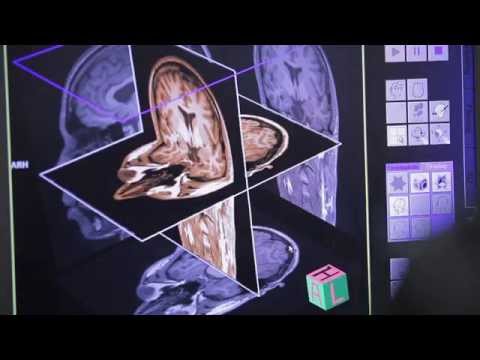
Presentation

Student testimonials
Mobility
Professional Prospects
Contact information
Contact Information
Ms Delphine Jochaut
T. +41 (0)22 379 08 93
[javascript protected email address]