
Master of
Law, Economic law, Right of public action, Civil and criminal law
MASTER OF LAW*:
The Master of Law follows the Bachelor programme to complete students' basic legal training. Graduates can therefore enter the job market directly. Thanks to the range of available electives and the dissertation, students may have the opportunity to gain general knowledge in various legal fields.
THEMATIC MASTER'S PROGRAMMES*:
- Economic law: focuses on topics relating to business, finance, taxation and competition
- Civil and criminal law: focuses on topics relating to family law, inheritance, legal responsibility, offences and criminal justice
- Public law: focuses on topics relating to the public interest, public services, the social sector and the environment
*This programme is available in a bilingual format (Geneva/Basel).
Master of
Law, Economic law, Right of public action, Civil and criminal law
MASTER OF LAW*:
The Master of Law follows the Bachelor programme to complete students' basic legal training. Graduates can therefore enter the job market directly. Thanks to the range of available electives and the dissertation, students may have the opportunity to gain general knowledge in various legal fields.
THEMATIC MASTER'S PROGRAMMES*:
- Economic law: focuses on topics relating to business, finance, taxation and competition
- Civil and criminal law: focuses on topics relating to family law, inheritance, legal responsibility, offences and criminal justice
- Public law: focuses on topics relating to the public interest, public services, the social sector and the environment
*This programme is available in a bilingual format (Geneva/Basel).
Programme length
1.5 years (3 semesters)
Language of instruction
French
Courses in English.
Passive knowledge of German is strongly recommended.
Conditions of registration
Admission Conditions
A Bachelor of Law from a Swiss university or an equivalent foreign law degree.Applications
Deadline for Fall Semester: 30 April 2020
(28 February 2020 for applicants subject to a visa because of their nationality, as set forth in Swiss federal regulations)
Deadline for Spring Semester: 30 November 2020
(30 September 2020 for applicants subject to a visa because of their nationality, as set forth in Swiss federal regulations)
Master of Law, Economic law, Right of public action, Civil and criminal law
- 6 core courses (36 credits)
- 6 electives (36 credits)
- Dissertation and seminar (18 credits):
- The dissertation is written as part of a seminar; however, students may write their dissertation outside the seminar (12 credits) and supplement it with an additional elective (6 credits).
Videos

civil and criminal law
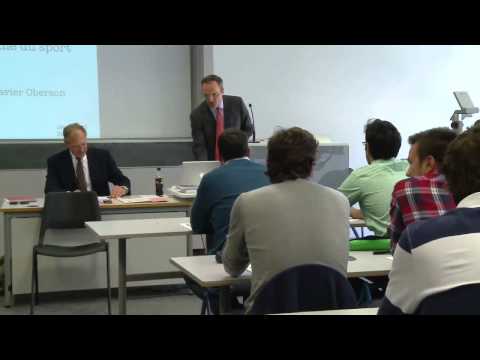
economic law

right of public action

Student testimonials

Laws
Mobility
Professional Prospects
Private or public sector jurist, lawyer, solicitor, judge, legal advisor in government or non-governmental organisations, etc.
Contact information
Contact Information
Mme Caterina Gidari Wassmer
T. +41 (0)22 379 85 63
conseilleres-droit@unige.ch
Mme Bita Bertossa
T. +41 (0)22 379 86 07
conseilleres-droit@unige.ch
Master in
International and European law
MASTER OF LAW*:
The Master of Law follows the Bachelor programme to complete students' basic legal training. Graduates can therefore enter the job market directly. Thanks to the range of available electives and the dissertation, students may have the opportunity to gain general knowledge in various legal fields.
THEMATIC MASTER'S PROGRAMME*:
- International and European law: focuses on topics relating to peace and cooperation, international organisations, the European Union, trade and individuals within the international community.
*This programme is available in a bilingual format (Geneva/Basel).
Master in
International and European law
MASTER OF LAW*:
The Master of Law follows the Bachelor programme to complete students' basic legal training. Graduates can therefore enter the job market directly. Thanks to the range of available electives and the dissertation, students may have the opportunity to gain general knowledge in various legal fields.
THEMATIC MASTER'S PROGRAMME*:
- International and European law: focuses on topics relating to peace and cooperation, international organisations, the European Union, trade and individuals within the international community.
*This programme is available in a bilingual format (Geneva/Basel).
Programme length
1.5 years (3 semesters)
Language of instruction
French
Passive knowledge of German is strongly recommended.
Courses in English
Conditions of registration
Admission Conditions
A Bachelor of Law from a Swiss university or an equivalent foreign law degree.Applications
Deadline for Fall Semester: 30 April 2020
(28 February 2020 for applicants subject to a visa because of their nationality, as set forth in Swiss federal regulations)
Deadline for Spring Semester: 30 November 2020
(30 September 2020 for applicants subject to a visa because of their nationality, as set forth in Swiss federal regulations)
Master in International and European law
- 6 core courses (36 credits)
- 6 electives (36 credits)
- Dissertation and seminar (18 credits):
- The dissertation is written as part of a seminar; however, students may write their dissertation outside the seminar (12 credits) and supplement it with an additional elective (6 credits).
Videos

Presentation

Student testimonials
Mobility
Professional Prospects
Contact information
Contact Information
Ms Caterina Gidari Wassmer
T. +41 (0)22 379 85 63
conseilleres-droit@unige.ch
Ms Bita Bertossa
T. +41 (0)22 379 86 07
conseilleres-droit@unige.ch
Bilingual Master of
Laws
is a joint programme with the Law Faculty of the University of Basel. It combines language skills and legal knowledge and enables students to obtain a degree from two Swiss universities. Students enrol either in Geneva or Basel and take courses at both universities (min. 30 ECTS credits from each).
Bilingual curriculum is available in the following programmes:
MASTER OF LAW (FREIES MASTERSTUDIUM)
THEMATIC PROGRAMMES:
- International and European law (Transnationales Recht)
- Public right of action (Verwaltungsrecht)
- Civil and criminal law (Generalis)
- Economic law (Wirtschaftsrecht)
Bilingual Master of
Laws
is a joint programme with the Law Faculty of the University of Basel. It combines language skills and legal knowledge and enables students to obtain a degree from two Swiss universities. Students enrol either in Geneva or Basel and take courses at both universities (min. 30 ECTS credits from each).
Bilingual curriculum is available in the following programmes:
MASTER OF LAW (FREIES MASTERSTUDIUM)
THEMATIC PROGRAMMES:
- International and European law (Transnationales Recht)
- Public right of action (Verwaltungsrecht)
- Civil and criminal law (Generalis)
- Economic law (Wirtschaftsrecht)
Programme length
1.5 years (3 semesters)
Languages of instruction
German, French
Some courses in English.
Conditions of registration
Admission Conditions
A Bachelor of Law from a Swiss university or an equivalent foreign law degree.Applications
Deadline for Fall Semester: 30 April 2020
(28 February 2020 for applicants subject to a visa because of their nationality, as set forth in Swiss federal regulations)
Deadline for Spring Semester: 30 November 2020
(30 September 2020 for applicants subject to a visa because of their nationality, as set forth in Swiss federal regulations)
Bilingual Master of Laws
- Bilingual Master of Laws (90 credits):
- In each of the two law faculties (at least 30 credits)
Dissertation and seminars (22 credits)
- Bilingual Thematic Master of Laws (90 credits):
In each of the two law faculties (at least 30 credits)
Courses relating to the chosen theme (at least 30 credits)
Dissertation and seminar (22 credits)
The dissertation is written as part of a seminar; however, students may write their dissertation outside the seminar (16 credits) and supplement it with an additional elective (6 credits).
Videos

Presentation

Student testimonials
Mobility
Professional Prospects
Private or public sector jurist, lawyer, solicitor, judge, legal advisor in government or non-governmental organisations, etc.
Contact information
Contact Information
Ms Caterina Gidari Wassmer
T. +41 (0)22 379 85 63
conseilleres-droit@unige.ch
Ms Bita Bertossa
T. +41 (0)22 379 86 07
conseilleres-droit@unige.ch
The Master in
Children's Rights
is built around an innovative and interdisciplinary curriculum that relies upon the theoretical and practical knowledge that has been developed in the area of children's rights, and active student participation is a key aspect of the programme. Classes are held from Monday to Thursday midday. The multidisciplinary profiles of the faculty members (law, psychology, sociology, education sciences), their active involvement in various academic and professional networks, and the programme's close ties with the International Institute for Children's Rights (IDE) in Sion all contribute to the dynamism of this Master's programme.
THE INTERFACULTY CENTRE FOR CHILDREN’S RIGHTS
With the creation of the new Interfaculty Centre for Children's Rights (CIDE), based in Sion in the Canton of Valais, the University of Geneva has made an important contribution to the visibility and prestige of interdisciplinary training in children's rights, both in Switzerland and abroad.
Building upon the activities of its professors and researchers, who come from diverse disciplinary backgrounds, and mobilising the competencies of its partner faculties (Law, Psychology and Education Sciences, Sciences of Society, Medicine), the CIDE analyses the major transformations that have affected the status of children over time, and in particular the social and legal changes which followed the 1989 Convention on children's rights, the most widely ratified international treaty. Almost every nation now recognises the child as a subject of rights - and no longer just an object of measures of protection - and therefore as an actor in society, capable of exercising the fundamental rights which belong to every human being.
With this new understanding of the status of the child, new professional and institutional practices have developed. Better implementation of the Convention on the Rights of the Child (for example, the situation of the child within the family or the school, the status of children in civil and criminal courts, North- South relations, development cooperation, etc.) involves numerous theoretical, conceptual and practical challenges.
In order to prepare students for careers in the various professional sectors which have been transformed by these changes, the CIDE offers a flagship training programme which has been a resounding success since it was launched in 2008: the Interdisciplinary Master in Children's Rights.
www.unige.ch/cide
The Master in
Children's Rights
is built around an innovative and interdisciplinary curriculum that relies upon the theoretical and practical knowledge that has been developed in the area of children's rights, and active student participation is a key aspect of the programme. Classes are held from Monday to Thursday midday. The multidisciplinary profiles of the faculty members (law, psychology, sociology, education sciences), their active involvement in various academic and professional networks, and the programme's close ties with the International Institute for Children's Rights (IDE) in Sion all contribute to the dynamism of this Master's programme.
THE INTERFACULTY CENTRE FOR CHILDREN’S RIGHTS
With the creation of the new Interfaculty Centre for Children's Rights (CIDE), based in Sion in the Canton of Valais, the University of Geneva has made an important contribution to the visibility and prestige of interdisciplinary training in children's rights, both in Switzerland and abroad.
Building upon the activities of its professors and researchers, who come from diverse disciplinary backgrounds, and mobilising the competencies of its partner faculties (Law, Psychology and Education Sciences, Sciences of Society, Medicine), the CIDE analyses the major transformations that have affected the status of children over time, and in particular the social and legal changes which followed the 1989 Convention on children's rights, the most widely ratified international treaty. Almost every nation now recognises the child as a subject of rights - and no longer just an object of measures of protection - and therefore as an actor in society, capable of exercising the fundamental rights which belong to every human being.
With this new understanding of the status of the child, new professional and institutional practices have developed. Better implementation of the Convention on the Rights of the Child (for example, the situation of the child within the family or the school, the status of children in civil and criminal courts, North- South relations, development cooperation, etc.) involves numerous theoretical, conceptual and practical challenges.
In order to prepare students for careers in the various professional sectors which have been transformed by these changes, the CIDE offers a flagship training programme which has been a resounding success since it was launched in 2008: the Interdisciplinary Master in Children's Rights.
www.unige.ch/cideProgramme length
1.5 years (3 semesters)
Language of instruction
French
Conditions of registration
Admission Conditions
A Bachelor or Master from a Swiss university in law, curative education, psychology, education sciences, humanities, social and political science.
Other diplomas from a Swiss university, HES or HEP may be recognized if equivalencies are established and/ or if certain conditions are met. Foreign students with a Bachelor degree of 180 ECTS or an equivalent degree from a university that is officially recognised by the authorities of the country where the degree was completed may also be admitted.
Applications
Deadline: 30 April 2020
(28 February 2020 for applicants subject to a visa because of their nationality, as set forth in Swiss federal regulations)
The Master in Children's Rights
- Foundation courses (1st semester) (30 credits):
- Theoretical foundations of the discipline and interdisciplinarity
- Specialised courses according to subject area (2nd semester) (30 credits):
- Interdisciplinary seminars
- Group project
- Specialisation (3rd semester) (30 credits):
- Dissertation
- Work placement or research orientation
Videos
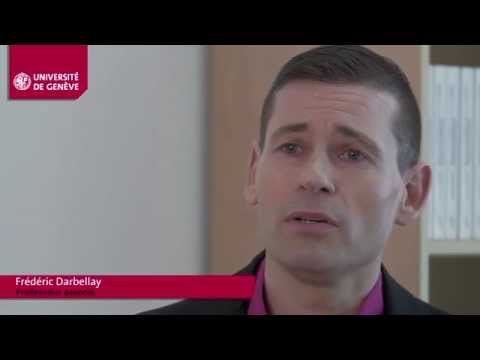
Presentation

Student testimonials
Mobility
Professional Prospects
Contact information
Contact Information
T. +41 (0)27 205 73 42
[javascript protected email address]
The Master in
Environmental Science
is offered through University of Geneva's Institute for Environmental Sciences (ISE). ISE pool distinct disciplinary expertise and backgrounds from various faculties, including the Faculty of Science, the Geneva School of Social Sciences and the Geneva School of Economics and Management.
This Master program aims at interdisciplinary teaching and research within current dynamic and fast growing environmental fields such as climate, energy, water biodiversity, human ecology, urbanism, governance and health.
Bridging these fields is the cornerstone of the curriculum offered to students - committing themselves to environmental careers or to fundamental research - an interdisciplinary approach to environmental sciences based on natural sciences and economic as well as social sciences.
Ultimately the master's program, enable the students to professionally navigate within complex and interdisciplinary environmental context far beyond the usual sectorial approach. This broad understanding of fields in natural sciences and economic and social sciences entailed in environmental management is a unique academic offering in Switzerland.
AVAILABLE SPECIALISATION MODULES:
- Biodiversity ecosystems and society
- Climatic impacts
- Sustainable development and urbanization
- Energy
- Water sciences
The Master in
Environmental Science
is offered through University of Geneva's Institute for Environmental Sciences (ISE). ISE pool distinct disciplinary expertise and backgrounds from various faculties, including the Faculty of Science, the Geneva School of Social Sciences and the Geneva School of Economics and Management.
This Master program aims at interdisciplinary teaching and research within current dynamic and fast growing environmental fields such as climate, energy, water biodiversity, human ecology, urbanism, governance and health.
Bridging these fields is the cornerstone of the curriculum offered to students - committing themselves to environmental careers or to fundamental research - an interdisciplinary approach to environmental sciences based on natural sciences and economic as well as social sciences.
Ultimately the master's program, enable the students to professionally navigate within complex and interdisciplinary environmental context far beyond the usual sectorial approach. This broad understanding of fields in natural sciences and economic and social sciences entailed in environmental management is a unique academic offering in Switzerland.
AVAILABLE SPECIALISATION MODULES:
- Biodiversity ecosystems and society
- Climatic impacts
- Sustainable development and urbanization
- Energy
- Water sciences
Programme length
2 years (4 semesters)
Languages of instruction
French (level B1) / English (level B1)
Conditions of registration
Admission Conditions
A Bachelor degree in Science, Economics, Social Science, International Relations, Medicine, Law or another degree deemed to be equivalent. HES (University of Applied Sciences) students who are specializing in environmental sciences are eligible for this programme, provided that their application is accepted and that they successfully complete additional courses, which may be equivalent to a maximum of 30 credits.
Merit-based admission.
Applications
Deadline: 28 February 2020
www.unige.ch/enrolmentThe Master in Environmental Science
- Interdisciplinarity and immersion (16 credits)
- Fundamentals (18 credits)
- Methods (8 credits)
- Specialized courses (27 credits)
- Elective (18 credits)
- Dissertation (33 credits)
Mobility
Professional Prospects
A Master in Environmental Science leads to a number of opportunities both in Switzerland and abroad, in areas such as:
- Government policy analysis and decision making: implementation of Sustainability agendas ( eg. Agenda-21) urban, land-use, transport and energy planning
- Private sector consulting for companies: resources management, carbon emission limitation, energy savings
- International negotiations: post-Kyoto international negotiations (2012 and beyond), biodiversity, health, habitat
- Sectorial opportunities: energy (renewable energy, energy savings, constructions), chemical lab analysis, used waters, environmental heritage management (biodiversity, etc.), health, natural and financial risks, urban and land planning
- Consulting firm, administration, politics, scientific journalism, teaching, cooperation
- Fundamental research: physics, biology, chemistry, climatology, the humanities and social sciences
Contact information
Contact information
Ms Nicole Efrancey Dao
T. +41 (0)22 379 08 76
[javascript protected email address]