
The Master in
Astrophysics
provides advanced training in astrophysics with an emphasis on exo-planetology, stellar and extra-galactic physics, ground- and space-based instrumentation, and concepts and tools of modern data science. It includes common courses and a specialisation in one of the above domains. The programme and dissertation work take place in a renowned research institute (the Department of Astronomy of the University, also known as the "Geneva Observatory"), offering direct contacts with the local research groups and with international collaborations which use and contribute to state-of-the-art facilities of the field (ESO, ESA, NASA, and others).
Through the programme, students acquire both a solid foundation in modern astrophysics and expertise in their field of specialisation. The programme leads to careers in areas such as research, teaching and industry, and develops valuable skills for future.
AVAILABLE ORIENTATIONS:
- Exoplanetology
- From stars to the Universe
- Instrumentation and data analysis
The Master in
Astrophysics
provides advanced training in astrophysics with an emphasis on exo-planetology, stellar and extra-galactic physics, ground- and space-based instrumentation, and concepts and tools of modern data science. It includes common courses and a specialisation in one of the above domains. The programme and dissertation work take place in a renowned research institute (the Department of Astronomy of the University, also known as the "Geneva Observatory"), offering direct contacts with the local research groups and with international collaborations which use and contribute to state-of-the-art facilities of the field (ESO, ESA, NASA, and others).
Through the programme, students acquire both a solid foundation in modern astrophysics and expertise in their field of specialisation. The programme leads to careers in areas such as research, teaching and industry, and develops valuable skills for future.
AVAILABLE ORIENTATIONS:
- Exoplanetology
- From stars to the Universe
- Instrumentation and data analysis
Programme length
2 years (4 semesters)
Languages of instruction
English
Conditions of registration
Admission Conditions
A Bachelor in Physics, or an equivalent degree.Applications
Deadline: 30 April 2020(28 February 2020 for applicants subject to a visa because of their nationality, as set forth in Swiss federal regulations)
The Master in Astrophysics
- Specialisation courses and electives, seminars, course work (60 credits)
- Dissertation (60 credits)
PLANET S
Origin, evolution and characterisation of planets in the solar system and beyond. Since the discovery of exo-planets by the UNIGE back in 1995, planetology now not only focuses on discovery, but on the physical and chemical characterisation of these new worlds. In this context the activities of PlanetS concern three main themes: the origin, evolution, and characterization of planets and planetary systems as a whole. Ultimately, PlanetS lays the foundations of a Swiss Institute of Planetary Sciences that will carry on these activities beyond the lifetime of the National Centre of Competence in Research.
Videos
Presentation
Mobility
Professional Prospects
The Master in Astrophysics leads to a number of opportunities both in Switzerland and abroad, including:
- Research
- Data Science
- International organisations (ESA, ESO)
- Industry
- Teaching
- Communication and science outreach
Contact information
Contact information
Mr Daniel Schaerer
T. +41(0)22 379 24 54
Daniel.Schaerer@unige.ch
astro-master@unige.ch
The Master in
Computer Sciences
provides comprehensive, multidisciplinary training in the information and communication sciences. It includes courses in various areas, such as science, economics and social sciences, on subjects like data-mining, information research, man-machine interfaces, cryptography and security, distributed computing, automatic language processing and knowledge modelling.
The programme benefits from the excellent synergies that exist within the Computer Science Centre (CUI). Students may also enhance their training with a three-month work placement in a company. This Master's programme provides students with solid skills in computer science as well as special expertise within their chosen area of specialisation.
The Master in
Computer Sciences
provides comprehensive, multidisciplinary training in the information and communication sciences. It includes courses in various areas, such as science, economics and social sciences, on subjects like data-mining, information research, man-machine interfaces, cryptography and security, distributed computing, automatic language processing and knowledge modelling.
The programme benefits from the excellent synergies that exist within the Computer Science Centre (CUI). Students may also enhance their training with a three-month work placement in a company. This Master's programme provides students with solid skills in computer science as well as special expertise within their chosen area of specialisation.
Programme length
1.5 years (3 semesters)
Languages of instruction
French, English
Conditions of registration
Admission Conditions
A Bachelor in Computer Science or an equivalent degree, as determined by a review of the candidate's application. Prerequisites may be required.Applications
Deadline: 30 April 2020
(28 February 2020 for applicants subject to a visa because of their nationality, as set forth in Swiss federal regulations)
The Master in Computer Sciences
- Required courses (30 credits):
- Metaheuristics for optimisation
- Software modelling and verification
- Systems modelling and design
- Semantic web technology
- Seminar of introduction to research
- Linguistic and empirical approaches to language processing
- Information processing and analysis
- Electives (30 credits):
- Advanced tools
- Modelling and simulation of natural phenomena
- Security of information systems
- Techniques in man-machine interaction
- Seminars on emerging industrial and scientific topics
- Service innovation lab
- Services - from concept to market
- Knowledge organisation systems
- Project on new information and communication technologies (NTIC)
- Topics in natural language processing, etc.
- Dissertation (30 credits)
Mobility
Students may earn up to 30 credits while on exchange. They may also conduct research outside the university under the supervision of a faculty member, or do a work placement at a leading external laboratory in order to complete their Master's degree.
Professional Prospects
A Master in Computer Science leads to a number of opportunities both in Switzerland and abroad, in areas such as:
- Analysis and management of large volumes of data (Big Data)
- Network management
- Project management
- Teaching
- IT firms
- Banks
- Service industry
- Administration and public services.
Contact information
Mr Stéphane Marchand-Maillet
T. +41 (0)22 379 01 54
[javascript protected email address]
The Master in
Mathematics
is an extension of the Bachelor of Science in Mathematics or in Mathematics and Computer Science, which gives students the opportunity to specialise in one of the research areas of the Mathematics section (algebra, analysis, geometry, topology, mathematical physics, probability and statistics, numerical analysis). The programme offers two streams: the «research» stream includes advanced courses for specialisation in a chosen field; the «general»stream allows students to broaden the scope of their degree by choosing electives offered by other university sections or departments. Through this programme, students will learn to use the mathematical tools that are now essential in research, industry, economics and finance.
AVAILABLE ORIENTATIONS:
- Research
- General
The Master in
Mathematics
is an extension of the Bachelor of Science in Mathematics or in Mathematics and Computer Science, which gives students the opportunity to specialise in one of the research areas of the Mathematics section (algebra, analysis, geometry, topology, mathematical physics, probability and statistics, numerical analysis). The programme offers two streams: the «research» stream includes advanced courses for specialisation in a chosen field; the «general»stream allows students to broaden the scope of their degree by choosing electives offered by other university sections or departments. Through this programme, students will learn to use the mathematical tools that are now essential in research, industry, economics and finance.
AVAILABLE ORIENTATIONS:
- Research
- General
Programme length
1.5 years (3 semesters)
Language of instruction
French
Working knowledge of English is recommended.
Conditions of registration
Admission Conditions
A Bachelor in Mathematics or in Mathematics and Computer Science, or a degree deemed equivalent upon review of the application.Applications
Deadline: 30 April 2020
(28 February 2020 for applicants subject to a visa because of their nationality, as set forth in Swiss federal regulations)
The Master in Mathematics
- Required courses and electives (60 credits):
Electives or advanced courses (40 credits)
- Knot Theory
- Optimisation
- Tropical Geometry
- Fundamentals of Mathematical Finance Seminar, etc.
Seminar (10 credits)
- Algebra
- Geometry and Combinatorics
- Numerical
- Analysis, Mathematical Physics, etc.
Reading project (10 credits)
Enables students to begin specialising in the field chosen for their Master's dissertation.
- Dissertation (30 credits)
Videos
mathematics
Student testimonials
Mobility
Professional Prospects
The Master in Mathematics opens up a number of opportunities both in Switzerland and abroad, including:
- Applied research in the private sector
- Telecommunications
- Insurance
- Banks and financial institutions
- Pharmaceutical companies and industry
- Consulting
- Academic research (doctoral, post-doctoral)
- Teaching, etc.
Contact information
Contact Information
Mr David Cimasoni
[javascript protected email address]
unige.ch/math/folks/cimasoni/conseil.html
The Master in
Mathematics and Computer Science
The Master in
Mathematics and Computer Science
Programme length
1.5 years (3 semesters)
Languages of instruction
French, English
Conditions of registration
Admission Conditions
A Bachelor in Mathematics or in Mathematics and Computer Science, or a degree deemed equivalent upon review of the application. For certain degrees, prerequisites can be required.
Applications
Deadline: 30 April 2020
(28 February 2020 for applicants subject to a visa because of their nationality, as set forth in Swiss federal regulations)
The Master in Mathematics and Computer Science
- Required courses and electives (60 credits):
- Students must take 12 semester-long courses, including at least 4 in mathematics and 4 in computer science.
- Geometric Integration
- The Ising Model
- Number Theory
- Knot Theory
- Lie Algebras
- Probabilistic Algorithms
- Parallel Algorithms
- Bioinformatics
- Data Mining
- Multimedia Security, etc.
- Dissertation (30 credits)
Videos

MATHEMATICS AND COMPUTER SCIENCE
Mobility
Professional Prospects
The Master of Science in Mathematics and Computer Science leads to a number of opportunities both in Switzerland and abroad, including:
- Applied research in the private sector
- Telecommunications
- Insurance
- Banks and financial institutions
- Pharmaceutical companies and industry
- Consulting
- Academic research (doctoral, post-doctoral)
- Teaching, etc.
Contact information
Contact Information
Mr David Cimasoni
[javascript protected email address]
unige.ch/math/folks/cimasoni/conseil.html
The Master in
Biology
proposes a number of topics, such as genetics, evolution, molecular and cellular mechanisms, physiology, the environment and biodiversity. The programme is therefore founded on various disciplines, including animal biology, plant biology, anthropology, cell biology and molecular biology. It allows students to increase their practical knowledge, primarily through laboratory work. It also allows students to do work placements in other fields, such as marine biology, ecology and alpine or tropical botany. In addition to the general Master of Science in Biology, which consists entirely of electives, a number of specialisations are available for a more targeted curriculum.
AVAILABLE ORIENTATIONS:
- General (electives)
- Specialisation:
- Biodiversity and systematics
- Genetics, development and evolution
- Bioinformatics and data analysis
- Molecular plant science
The Master in
Biology
proposes a number of topics, such as genetics, evolution, molecular and cellular mechanisms, physiology, the environment and biodiversity. The programme is therefore founded on various disciplines, including animal biology, plant biology, anthropology, cell biology and molecular biology. It allows students to increase their practical knowledge, primarily through laboratory work. It also allows students to do work placements in other fields, such as marine biology, ecology and alpine or tropical botany. In addition to the general Master of Science in Biology, which consists entirely of electives, a number of specialisations are available for a more targeted curriculum.
AVAILABLE ORIENTATIONS:
- General (electives)
- Specialisation:
- Biodiversity and systematics
- Genetics, development and evolution
- Bioinformatics and data analysis
- Molecular plant science
Programme length
1.5 years (3 semesters)
Languages of instruction
French, English
Conditions of registration
Admission Conditions
A Bachelor in Biology or an equivalent degree. Students are required to find a laboratory or group in which to conduct their research project.Applications
Deadline for Fall Semester: 30 April 2020
(28 February 2020 for applicants subject to a visa because of their nationality, as set forth in Swiss federal regulations)
Deadline for Spring Semester:
30 November 2020
(30 September 2020 for applicants subject to a visa because of their nationality, as set forth in Swiss federal regulations)
The Master in Biology
- Electives or required courses, depending on the chosen stream (30 credits)
- Research project and dissertation (60 credits)
Videos
Presentation
Student testimonials
Mobility
Professional Prospects
The Master of Science in Biology leads to a number of professions both in Switzerland and abroad, including:
- Museums and botanical gardens
- Bioinformatics
- Ecology-oriented services
- Scientific journalism
- Scientific consulting in governmental or private organisations which finance or supervise research
- Banking sector (for scientific consulting)
- Fundamental and medical research in public institutions
- Scientific research and consulting in biotech and pharmaceutical companies
- Biology teaching in middle school and high school
Contact information
Contact Information
Ms Audrey Bellier
T. +41 (0)22 379 66 56 (mondays)
[javascript protected email address]
The Master in
Physics
provides advanced training in physics. It includes specialisations in areas such as particle physics, quantum matter physics, theoretical physics, applied physics. The programme and work placements give students the opportunity to work with prestigious institutions, including CERN, ESA and NASA. Through the programme, students acquire both a solid foundation in modern physics and expertise in their field of specialisation. The programme leads to careers in areas such as research, teaching and industry, and develops modelling skills that are very valued, including in the economics and finance sectors.
AVAILABLE ORIENTATIONS:
- Applied physics
- Quantum matter physics
- Particle and nuclear physics
- Theoretical physics
The Master in
Physics
provides advanced training in physics. It includes specialisations in areas such as particle physics, quantum matter physics, theoretical physics, applied physics. The programme and work placements give students the opportunity to work with prestigious institutions, including CERN, ESA and NASA. Through the programme, students acquire both a solid foundation in modern physics and expertise in their field of specialisation. The programme leads to careers in areas such as research, teaching and industry, and develops modelling skills that are very valued, including in the economics and finance sectors.
AVAILABLE ORIENTATIONS:
- Applied physics
- Quantum matter physics
- Particle and nuclear physics
- Theoretical physics
Programme length
2 years (4 semesters)
Language of instruction
English
Working knowledge of French is recommended.
Conditions of registration
Admission Conditions
A Bachelor in Physics, or an equivalent degree.Applications
Deadline: 30 April 2020
(28 February 2020 for applicants subject to a visa because of their nationality, as set forth in Swiss federal regulations)
The Master in Physics
- Specialisation courses and electives, seminars, course work (60 credits)
- Dissertation (60 credits)
Videos
Presentation
Student testimonials
Mobility
Professional Prospects
The Master in Physics leads to a number of opportunities both in Switzerland and abroad, including:
- Research
- Industry
- Medical applications
- Climatology, energy, environmental applications
- Teaching
- Finance, management, etc.
Contact information
Contact information
Mr Peter Wittwer
T. +41 (0)22 379 62 48
conseiller-etudes-master-physique@unige.ch
The Master in
Prehistoric Archaeology
The Master in
Prehistoric Archaeology
Programme length
2 years (4 semesters)
Languages of instruction
French, English
Conditions of registration
Admission Conditions
A Bachelor in Prehistoric Archaeology, Archaeology, Prehistory or a degree deemed equivalent. Completion of complementary credits could be asked.
Applications
Deadline: 30 April 2020
(28 February 2020 for applicants subject to a visa because of their nationality, as set forth in Swiss federal regulations)
The Master in Prehistoric Archaeology
- Required courses (48 credits):
- Neolithic Europe
- Europe in the Bronze and Iron Ages
- Paleolithic and Neolithic of Africa
- Metal Ages in Africa
- Theoretical Archaeology
- Ethnoarchaeology
- Archaeozoology
- Palaeoanthropology, etc.
- Electives (12 credits):
- The choices must be approved by the person in charge of MA dissertation.
- Dissertation (60 credits)
Videos
Student testimonials
Presentation
Mobility
Professional Prospects
The Master in Prehistoric Archaeology leads to a number of professions both in Switzerland and abroad, including:
- Archaeologist (notably in the cantonal archaeological services, rescue archaeology research institutions, rescue archaeology firms and international rescue archaeology programmes in Africa)
- Teacher and scientific researcher
- Museum curator
- Culture-related occupations
- Secondary school teacher, etc.
Contact information
Contact information
LABORATORY OF PREHISTORIC ARCHAEOLOGY AND ANTHROPOLOGY
Ms Marie Besse
T. +41 (0)22 379 69 15
[javascript protected email address]
LABORATORY OF ARCHAEOLOGY AND AFRICAN SETTLEMENT
Mr Eric Huysecom
T. +41 (0)22 379 69 73
[javascript protected email address]
The Master in
Earth Sciences
is an advanced programme in multiple areas of Earth Sciences that combines basic science and practical applications. It is a joint programme of the University of Geneva and the University of Lausanne's School of Earth and Environmental Sciences (Ecole lémanique des sciences de la Terre - ELSTE), and provides vast academic and practical expertise covering most branches of the Earth sciences. Particular focus is placed on reservoir geology (water, oil), sedimentology, global changes, metalliferous deposits, geochronology and geochemistry, natural dangers and volcanology. Students have access to high-tech methods and laboratories and are involved in field studies on all continents, in cooperation with academic, research and industry partners.
AVAILABLE ORIENTATIONS:
- Geochemistry-Alpine Tectonics-Ore Deposits
- Geological risk
- Sedimentary, Environmental, and Reservoir Geology
The Master in
Earth Sciences
is an advanced programme in multiple areas of Earth Sciences that combines basic science and practical applications. It is a joint programme of the University of Geneva and the University of Lausanne's School of Earth and Environmental Sciences (Ecole lémanique des sciences de la Terre - ELSTE), and provides vast academic and practical expertise covering most branches of the Earth sciences. Particular focus is placed on reservoir geology (water, oil), sedimentology, global changes, metalliferous deposits, geochronology and geochemistry, natural dangers and volcanology. Students have access to high-tech methods and laboratories and are involved in field studies on all continents, in cooperation with academic, research and industry partners.
AVAILABLE ORIENTATIONS:
- Geochemistry-Alpine Tectonics-Ore Deposits
- Geological risk
- Sedimentary, Environmental, and Reservoir Geology
Programme length
2 years (4 semesters)
Languages of instruction
French, English
Conditions of registration
Admission Conditions
A Bachelor in Earth and Environmental Sciences from the University of Geneva, a Bachelor in Geosciences and Environment with a concentration in geology from the University of Lausanne, or a degree deemed equivalent, upon completion of up to 30 credits of supplementary courses.Applications
Deadline: 30 April 2020
(28 February 2020 for applicants subject to a visa because of their nationality, as set forth in Swiss federal regulations)
The Master in Earth Sciences
- Required courses and field work (24 credits)
- Required courses and field work, limited electives (24 credits)
- Free electives (12 credits)
- Research and dissertation (60 credits)
Videos
Presentation
Student testimonials
Mobility
Professional Prospects
The Master in Earth Sciences leads to a number of opportunities both in Switzerland and abroad, including:
- Construction of large-scale civil engineering projects
- Resolution and management of ecological, environmental and land-use problems
- Natural disaster risk prevention
- Teaching and scientific research (secondary schools, higher education, museums)
- Research on and/or exploitation of natural resources (ore, water, building materials) or energy resources (oil and gas, geothermics), etc.
Contact information
Contact information
Mr Robert Moritz
T. +41 (0)22 379 66 33
[javascript protected email address]
The Master in
Pharmacy
The aim of the Master's in Pharmacy is to provide students with Bachelor's degrees in pharmaceutical science with the knowledge necessary for a career in pharmacy in a range of different areas and specialisations (retail pharmacies, hospital pharmacies, industry, academia, clinical chemistry, administration, humanitarian organisations, etc.) Upon completing the Master's programme, the majority of graduates also sit the Swiss federal pharmacy examination.
The programme is composed of theoretical and practical training in every area of medication: discovery, conception, development, and the clinical, hospital and community aspects.
Students conduct individual research projects in academic, industrial or hospital laboratories. The course is supplemented with a number of practical internships in retail pharmacies and at the hospital.
The Master in
Pharmacy
The aim of the Master's in Pharmacy is to provide students with Bachelor's degrees in pharmaceutical science with the knowledge necessary for a career in pharmacy in a range of different areas and specialisations (retail pharmacies, hospital pharmacies, industry, academia, clinical chemistry, administration, humanitarian organisations, etc.) Upon completing the Master's programme, the majority of graduates also sit the Swiss federal pharmacy examination.
The programme is composed of theoretical and practical training in every area of medication: discovery, conception, development, and the clinical, hospital and community aspects.
Students conduct individual research projects in academic, industrial or hospital laboratories. The course is supplemented with a number of practical internships in retail pharmacies and at the hospital.
Programme length
2 years (4 semesters)
Language of instruction
French
Conditions of registration
Admission Conditions
A Bachelor in Pharmaceutical Science from UNIGE or an equivalent degree.Applications
Deadline: 30 April 2020
(28 February 2020 for applicants subject to a visa because of their nationality, as set forth in Swiss federal regulations)
The Master in Pharmacy
- First year (60 credits):
- Theoretical and practical classes and lectures
- Second year (60 credits):
Individual research project (20 weeks)
Assistantship in a retail pharmacy (20 weeks)
Chosen internships (6 weeks)
Mobility
Students may earn up to 30 credits while on exchange. They may also conduct research outside the university under the supervision of a faculty member, or do a work placement at a leading external laboratory in order to complete their Master's degree.
Professional Prospects
A Master in Pharmacy leads to a number of opportunities in areas such as:
- Community pharmacy (pharmacist)
- Hospital pharmacy
- Industry (research, development, regulatory affairs, quality assurance, medical affairs, pharmacovigilance)
- Academia (research, teaching)
- Administration (public health, professional corporations, etc.)
- Clinical chemistry, medical analysis laboratories
- Humanitarian organisations.
Contact information
Contact information
Ms Elisabeth Rivara-Minten
T. +41 (0)22 379 65 82
[javascript protected email address]
Bidisciplinary Master of
Science
provides students with a Bachelor's degree in Mathematics, Computer Science, Physics, Chemistry, Biochemistry, Biology or Earth and Environmental Sciences the opportunity to further their studies in a field (minor concentration) other than the one chosen at the Bachelor level (major concentration). This programme prepares graduates to work at the crossroads between two scientific branches, in research or in teaching.
AVAILABLE DISCIPLINES:
- Mathematics
- Computer Science
- Physics
- Chemistry
- Biology
- Earth and Environmental Sciences
Bidisciplinary Master of
Science
provides students with a Bachelor's degree in Mathematics, Computer Science, Physics, Chemistry, Biochemistry, Biology or Earth and Environmental Sciences the opportunity to further their studies in a field (minor concentration) other than the one chosen at the Bachelor level (major concentration). This programme prepares graduates to work at the crossroads between two scientific branches, in research or in teaching.
AVAILABLE DISCIPLINES:
- Mathematics
- Computer Science
- Physics
- Chemistry
- Biology
- Earth and Environmental Sciences
Programme length
1.5 years or 2 years (3 or 4 semesters)
Language of instruction
French
Conditions of registration
Admission Conditions
A Bachelor's degree in one of the following fields: Mathematics, Computer Science, Physics, Chemistry, Biology or Earth and Environmental Sciences; or an equivalent degree. Up to 30 credits of supplementary courses may be necessary depending on the chosen major-minor combination.Applications
Deadline: 30 April 2020
(28 February 2020 for applicants subject to a visa because of their nationality, as set forth in Swiss federal regulations)
Bidisciplinary Master of Science
- Required courses:
60 or 90 credits
Depending on minor concentration.
- Research paper and dissertation:
30 credits
Combining both fields of study.
Mobility
Professional Prospects
Contact information
Contact information
Mr Xavier Chillier
T. +41 (0)22 379 67 15
[javascript protected email address]
The Master in
Chemical Biology
prepares students to think beyond the State-of-the-art. Specifically, students will learn how to probe biological problems at the molecular level using innovative chemistry and biophysical approaches. Students will be embedded within the National Centre for Competence in Research (NCCR) in Chemical Biology where they will receive individualized and highly interdisciplinary (biology, chemistry, biochemistry and biophysics) training from world-renowned researchers. The curriculum is primarily centred on practical teaching in a research environment. Numerous internships are offered in a variety of laboratories; these are allocated according to a programme that takes into consideration the undergraduate qualification, interests and goals of each student. A high student-teacher ratio ensures a quality framework. The Degree is awarded by the University of Geneva in collaboration with the École polytechnique fédérale de Lausanne (EPFL).
www.nccr-chembio.ch
The Master in
Chemical Biology
prepares students to think beyond the State-of-the-art. Specifically, students will learn how to probe biological problems at the molecular level using innovative chemistry and biophysical approaches. Students will be embedded within the National Centre for Competence in Research (NCCR) in Chemical Biology where they will receive individualized and highly interdisciplinary (biology, chemistry, biochemistry and biophysics) training from world-renowned researchers. The curriculum is primarily centred on practical teaching in a research environment. Numerous internships are offered in a variety of laboratories; these are allocated according to a programme that takes into consideration the undergraduate qualification, interests and goals of each student. A high student-teacher ratio ensures a quality framework. The Degree is awarded by the University of Geneva in collaboration with the École polytechnique fédérale de Lausanne (EPFL).
www.nccr-chembio.chProgramme length
1.5 years (3 semesters)
Language of instruction
English
Conditions of registration
Admission Conditions
A Bachelor in Chemistry, Biology, Physics, Biochemistry or a degree deemed equivalent upon review of the application, subject to supplementary classes and prerequisites for certain degrees.Applications
Deadline: 30 April 2020
(28 February 2020 for applicants subject to a visa because of their nationality, as set forth in Swiss federal regulations)
The Master in Chemical Biology
- Required Courses (25 credits):
- Current Topics in Chemical Biology and Biochemistry
- Basic Techniques in Chemical Biology
- Tutorial in Chemical Biology
- Microscopy and Imaging Course
Courses are scheduled at UNIGE or EPFL.
- Electives (5 credits):
Include courses at either UNIGE or EPFL and include:
- Element of bioinformatics
- Biophysics II
- Image Processing
- Chemistry of small Biological Molecules
- Cellular Signaling
- Bioactive Compounds Screening, etc.
- Two Practical Placements and dissertation (60 credits)
Mobility
Professional Prospects
The Master in Chemical Biology leads to a number of opportunities both in Switzerland and abroad, including:
- Academic research (doctorate, post-doctorate)
- Medical research
- Private sector research, development and production
- Regulatory affairs and scientific patents
- Administration and sales, etc.
Contact information
Contact Information
HEAD OF NCCR CHEMICAL BIOLOGY COMMITTEE OF EDUCATION
Mr Robbie Loewith
T. +41 (0)22 379 61 16
[javascript protected email address]
COO OF THE NCCR CHEMICAL BIOLOGY
Ms Phaedra Simitesk
T. +41 (0)22 379 64 07
[javascript protected email address]
The Master in
Chemistry
The Master in
Chemistry
Programme length
2 years (4 semesters)
Languages of instruction
English, French
Conditions of registration
Admission Conditions
A Bachelor in Chemistry or Biochemistry, or a degree deemed equivalent upon review of the application, subject to supplementary classes and prerequisites for certain degrees.Applications
Deadline for the Autumn Semester: 30 April 2018
(28 February 2020 for applicants subject to a visa because of their nationality, as set forth in Swiss federal regulations)
Deadline for the Spring Semester:
30 November 2020
(30 September 2020 for applicants subject to a visa because of their nationality, as set forth in Swiss federal regulations)
The Master in Chemistry
- Electives and work placement (60 credits):
Electives (44 credits)
- Advanced Spectroscopic Methods
- Bioinorganic and Supramolecular Chemistry
- Bioorganic Chemistry
- Total Synthesis
- Statistical Thermodynamics
- Computational Chemistry
- Nuclear Magnetic Resonance
- Mass Spectrometry, etc.
Work placements (16 credits)
- Research project and dissertation (60 credits)
Videos

Student testimonials

Presentation
Mobility
Professional Prospects
This Master leads to a number of opportunities both in Switzerland and abroad, including:
- Government and private biomedical analysis laboratories
- Quality control and assurance
- Development of new materials
- Environmental protection
- High value-added fine chemistry
- Workplace safety and hygiene
- Cosmetics and perfumes
- Pharmaceutical and bioactive compounds
- Agro-food industry
- Inks and pigments
- Regulations and scientific patents
- Management and sales
- Academic research (doctoral, post-doctoral)
- Private sector research, development and production, etc.
Contact information
Contact Information
Mr Didier Perret
T. +41 (0)22 379 31 87
[javascript protected email address]
The Master in
Biochemistry
allows students to specialise in domains such as transmembrane transport and membrane biochemistry, bioinformatics, cellular and molecular biology, neurobiology, and biophysics. Through this programme, students develop the methodological knowledge and experimental rigour which are essential for conducting research. The programme also provides state-of-the-art training in the area of cellular energy production. Students will master the key concepts in biochemistry from the molecular level to the cellular level in order to understand the precise mechanisms at work in cells.
The Master in
Biochemistry
allows students to specialise in domains such as transmembrane transport and membrane biochemistry, bioinformatics, cellular and molecular biology, neurobiology, and biophysics. Through this programme, students develop the methodological knowledge and experimental rigour which are essential for conducting research. The programme also provides state-of-the-art training in the area of cellular energy production. Students will master the key concepts in biochemistry from the molecular level to the cellular level in order to understand the precise mechanisms at work in cells.
Programme length
2 years (4 semesters)
Languages of instruction
English, French
Conditions of registration
Admission Conditions
A Bachelor in Biochemistry or Chemistry, or a degree deemed equivalent upon review of the application, subject to supplementary classes and prerequisites for certain degrees.Applications
Deadline for the Autumn Semester: 30 April 2020
(28 February 2020 for applicants subject to a visa because of their nationality, as set forth in Swiss federal regulations)
Deadline for the Spring Semester:
30 November 2020
(30 September 2020 for applicants subject to a visa because of their nationality, as set forth in Swiss federal regulations)
The Master in Biochemistry
- Electives and Work Placement (60 credits):
Electives (45 credits)
- Current topics in chemical biology and biochemistry
- Biochemistry and biophysics of membranes
- Cellular and molecular biology
- Molecular genetics of development
- Principles of neurobiology
- Bioinformatics
- Bioorganic chemistry
- Bioethic, etc.
Work placement (15 credits)
- Research Project and dissertation (60 credits)
Videos
Student testimonials
Presentation
Mobility
Professional Prospects
The Master in Biochemistry leads to a number of opportunities both in Switzerland and abroad, including:
- Medical research laboratories
- Government and private biomedical analysis laboratories
- Quality control and assurance
- Environmental protection
- Cosmetics and perfumes
- Pharmaceutical and bioactive compounds
- Agro-food industry
- Regulations and scientific patents
- Management and sales
- Medical research
- Biotechnologies
- Academic research (doctoral, post-doctoral)
- Private sector research, development and production, etc.
Contact information
Contact Information
Mr Didier Perret
T. +41 (0)22 379 31 87
[javascript protected email address]
The Master in
Environmental Science
is offered through University of Geneva's Institute for Environmental Sciences (ISE). ISE pool distinct disciplinary expertise and backgrounds from various faculties, including the Faculty of Science, the Geneva School of Social Sciences and the Geneva School of Economics and Management.
This Master program aims at interdisciplinary teaching and research within current dynamic and fast growing environmental fields such as climate, energy, water biodiversity, human ecology, urbanism, governance and health.
Bridging these fields is the cornerstone of the curriculum offered to students - committing themselves to environmental careers or to fundamental research - an interdisciplinary approach to environmental sciences based on natural sciences and economic as well as social sciences.
Ultimately the master's program, enable the students to professionally navigate within complex and interdisciplinary environmental context far beyond the usual sectorial approach. This broad understanding of fields in natural sciences and economic and social sciences entailed in environmental management is a unique academic offering in Switzerland.
AVAILABLE SPECIALISATION MODULES:
- Biodiversity ecosystems and society
- Climatic impacts
- Sustainable development and urbanization
- Energy
- Water sciences
The Master in
Environmental Science
is offered through University of Geneva's Institute for Environmental Sciences (ISE). ISE pool distinct disciplinary expertise and backgrounds from various faculties, including the Faculty of Science, the Geneva School of Social Sciences and the Geneva School of Economics and Management.
This Master program aims at interdisciplinary teaching and research within current dynamic and fast growing environmental fields such as climate, energy, water biodiversity, human ecology, urbanism, governance and health.
Bridging these fields is the cornerstone of the curriculum offered to students - committing themselves to environmental careers or to fundamental research - an interdisciplinary approach to environmental sciences based on natural sciences and economic as well as social sciences.
Ultimately the master's program, enable the students to professionally navigate within complex and interdisciplinary environmental context far beyond the usual sectorial approach. This broad understanding of fields in natural sciences and economic and social sciences entailed in environmental management is a unique academic offering in Switzerland.
AVAILABLE SPECIALISATION MODULES:
- Biodiversity ecosystems and society
- Climatic impacts
- Sustainable development and urbanization
- Energy
- Water sciences
Programme length
2 years (4 semesters)
Languages of instruction
French (level B1) / English (level B1)
Conditions of registration
Admission Conditions
A Bachelor degree in Science, Economics, Social Science, International Relations, Medicine, Law or another degree deemed to be equivalent. HES (University of Applied Sciences) students who are specializing in environmental sciences are eligible for this programme, provided that their application is accepted and that they successfully complete additional courses, which may be equivalent to a maximum of 30 credits.
Merit-based admission.
Applications
Deadline: 28 February 2020
www.unige.ch/enrolmentThe Master in Environmental Science
- Interdisciplinarity and immersion (16 credits)
- Fundamentals (18 credits)
- Methods (8 credits)
- Specialized courses (27 credits)
- Elective (18 credits)
- Dissertation (33 credits)
Mobility
Professional Prospects
A Master in Environmental Science leads to a number of opportunities both in Switzerland and abroad, in areas such as:
- Government policy analysis and decision making: implementation of Sustainability agendas ( eg. Agenda-21) urban, land-use, transport and energy planning
- Private sector consulting for companies: resources management, carbon emission limitation, energy savings
- International negotiations: post-Kyoto international negotiations (2012 and beyond), biodiversity, health, habitat
- Sectorial opportunities: energy (renewable energy, energy savings, constructions), chemical lab analysis, used waters, environmental heritage management (biodiversity, etc.), health, natural and financial risks, urban and land planning
- Consulting firm, administration, politics, scientific journalism, teaching, cooperation
- Fundamental research: physics, biology, chemistry, climatology, the humanities and social sciences
Contact information
Contact information
Ms Nicole Efrancey Dao
T. +41 (0)22 379 08 76
[javascript protected email address]
The Master in
Neuroscience
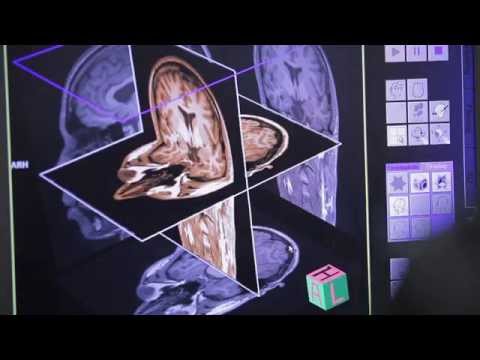
is a joint programme of the Faculty of Psychology and Education, the Faculty of Medicine and the Faculty of Science. It is managed by the Geneva University Neurocenter and focuses on theory, while also introducing students to scientific research and writing. The courses deal with brain function investigative techniques, neurobiology and cognitive and emotional processes. The programme is designed for students who want to work in neurosciences, including in hospitals and academia.
FOCUSES OF THE REQUIRED MODULES:
- Methodology, signal analysis, statistics
- Neurobiological fundamentals of cells and molecules
- Cognitive and affective sciences
The Master in
Neuroscience
is a joint programme of the Faculty of Psychology and Education, the Faculty of Medicine and the Faculty of Science. It is managed by the Geneva University Neurocenter and focuses on theory, while also introducing students to scientific research and writing. The courses deal with brain function investigative techniques, neurobiology and cognitive and emotional processes. The programme is designed for students who want to work in neurosciences, including in hospitals and academia.
FOCUSES OF THE REQUIRED MODULES:
- Methodology, signal analysis, statistics
- Neurobiological fundamentals of cells and molecules
- Cognitive and affective sciences
Programme length
1.5 years (3 semesters)
Languages of instruction
English, French
Conditions of registration
Admission Conditions
Bachelor of Science, Medicine or Psychology, or an equivalent degree.
Merit-based admission.
Applications
Deadline for enrolment at the University: 28 February 2020
(Deadline for applications at the Geneva University Neurocenter: 28 February 2020)
The Master in Neuroscience
- Required courses and electives (30 credits):
- Principles of Neurobiology
- Statistics and Probability
- Techniques for Investigating Brain Functions
- Introduction to Cognitive and Affective
- Neuroscience
- Clinical and Experimental Neuropsychology
- Neurobiology of Vigilance States
- PET and MRI Imaging in Neuroscience, etc.
- Research project (60 credits)
Videos
Presentation

Student testimonials
Mobility
Professional Prospects
Contact information
Contact Information
Ms Delphine Jochaut
T. +41 (0)22 379 08 93
[javascript protected email address]